Safe, compliant stone cleaning that meets Historic Environment Scotland guidance
Trusted by estates teams, FM providers, conservation officers, and local authorities.
Suitable for listed buildings subject to conservation officer approval and method sign-off.
Superheated steam at low pressure. No damage to delicate masonry. Full conservation documentation provided. Trusted by universities, councils, and heritage estates across Scotland.
RAMS, insurance certificates, and conservation documentation provided as standard.
High-pressure washing damages delicate masonry. Chemical cleaners stain porous stone. DOFF is the only method approved for Scotland's listed buildings.
Steam at 150°C but only 1-2 bar pressure. Penetrates stone pores without erosion — unlike pressure washers at 150+ bar.
Safe for sandstone, limestone, and soft Victorian masonry.
Steam only — no bleach, acids, or solvents that stain light-coloured sandstone or void conservation approvals.
Meets Historic Environment Scotland requirements.
Heat kills organic growth at root level. Buildings stay clean 2-3 years vs 12-18 months with pressure washing.
Reduces long-term maintenance costs.
We work with estates teams, conservation officers, and FM providers managing Scotland's most important buildings.
Historic sandstone campuses
Listed religious buildings
Civic buildings & monuments
Conservation properties
Listed office buildings
Historic healthcare sites
Public monuments
Conservation projects

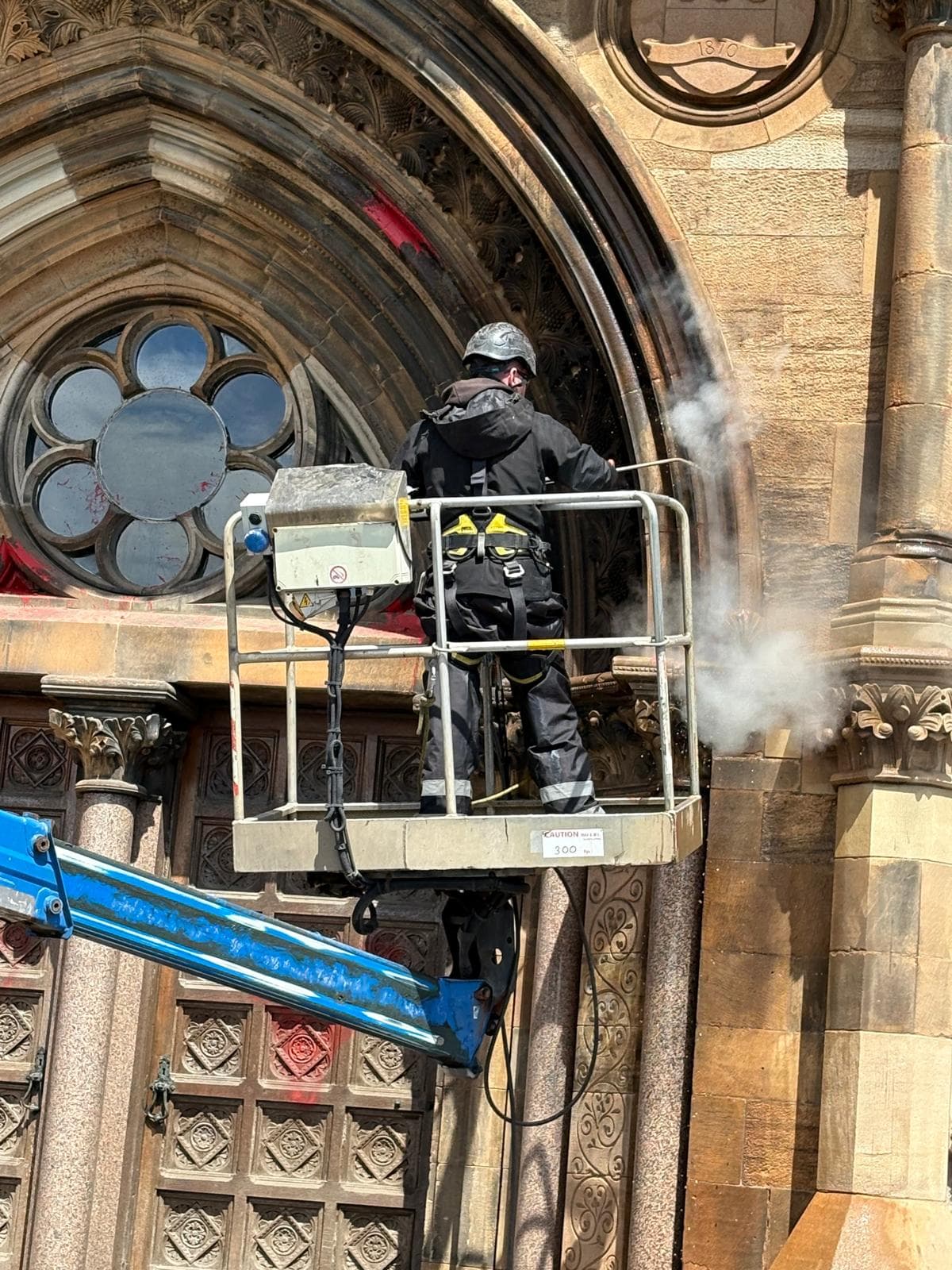
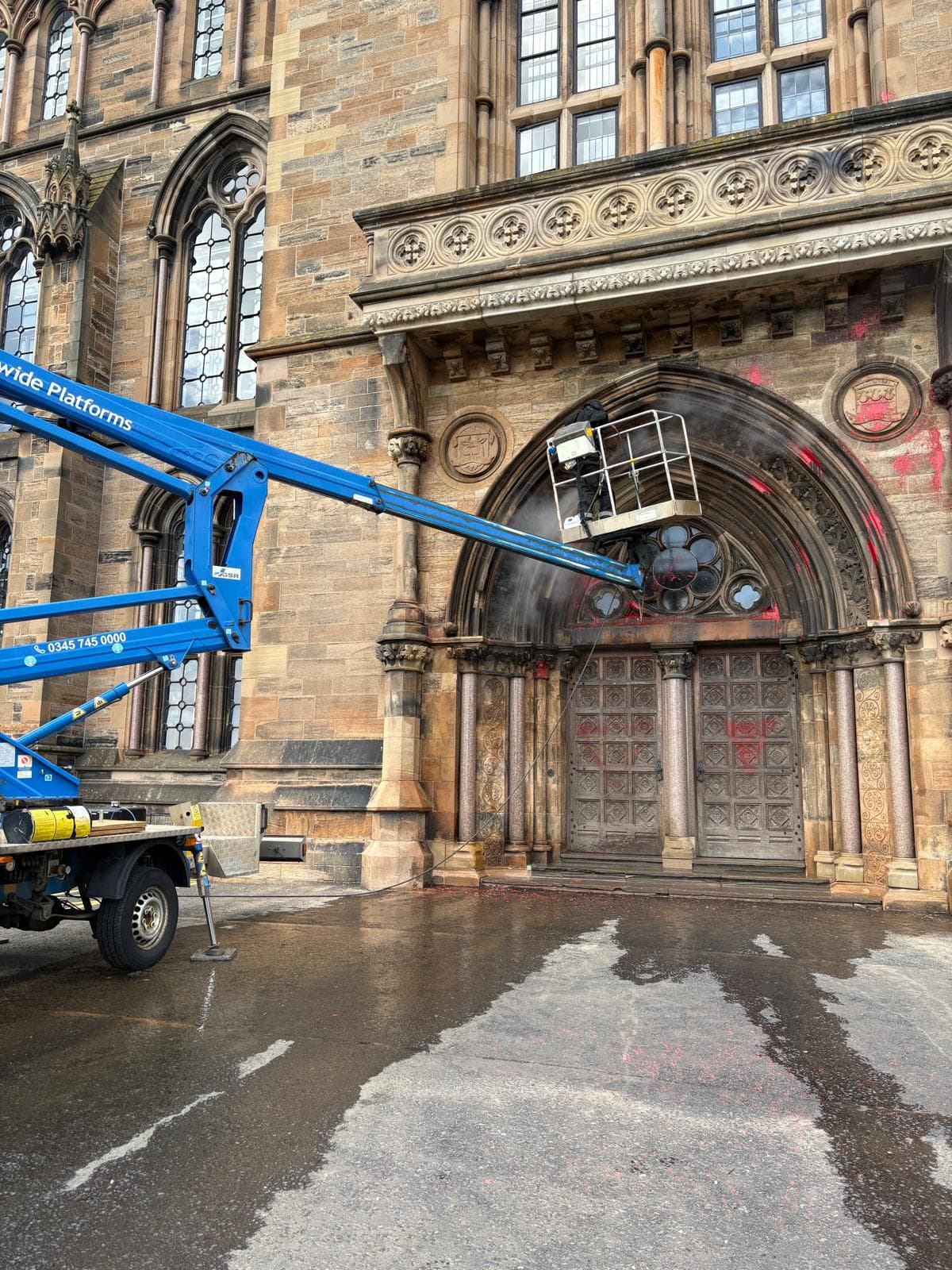
Spray paint graffiti on Category A listed sandstone — removed completely with DOFF steam, zero damage to 150-year-old stonework.
Delivered under conservation oversight with full photographic reporting.
The technical process behind heritage-safe stone cleaning.
Understanding the critical differences between DOFF and pressure washing for heritage buildings and delicate stonework.
Won't erode soft stone or damage mortar joints
Penetrates pores to lift contaminants from within stone structure
Steam only - won't stain or discolor porous masonry
Compliant with Historic Environment Scotland guidance for listed buildings
Sandstone, limestone, granite, marble - all safe
Heat kills organic growth at root level - stays clean longer
Using approved methods maintains heritage building coverage
Erodes soft sandstone and damages mortar joints over time
Saturates porous masonry - causes frost damage in winter
Bleach and acids can stain light-colored sandstone permanently
Breaches conservation requirements - voids listed building consent
Destroys carvings, inscriptions, and decorative stonework
Doesn't kill organic growth - algae and moss return faster
Using non-approved methods can invalidate building coverage
High-pressure washing is not suitable for:
Listed buildings, heritage stone, sandstone, limestone, Victorian masonry, or buildings in conservation areas. Use may breach conservation requirements.
Using high-pressure washing on heritage stonework can cause irreversible erosion, blown mortar joints, and damaged carvings. Non-compliant methods may breach listed building consent and affect heritage insurance coverage.
Get a conservation-compliant quote within 24 hours. Send us photos of your building for a preliminary assessment.
RAMS, insurance certificates, and conservation documentation provided as standard.
We provide heritage-approved DOFF cleaning for listed buildings, universities, churches, and civic properties nationwide.
For high-level heritage facades, we combine DOFF with IRATA rope access. For general stone and masonry, see our jet washing services.
Common questions about DOFF cleaning for heritage buildings and listed properties
Get a conservation-compliant quote for your listed building, church, university, or heritage property.
RAMS, insurance, and conservation documentation provided as standard.